Showing posts with label France. Show all posts

Saturday, April 20, 2013

Tour de France 2012: Bradley Wiggins ready to be first Briton to win 99th Tour de France


Tour de France 2012: Bradley Wiggins ready to be first Briton to win 99th Tour de France

Wiggins will become the first Briton to win the 99thTour de France in Paris on Sunday. This win would be a great gift for Briton’s before London Olympics begin which the 99th Tour de France. Only with his monumental achievements last year – he won the Tour’s green jersey and the World Championship – and his sporting X factor did the public finally recognise his talent by voting him the BBC Sports Personality of the Year. 


Wiggins has achieved massively on the track at Olympics and World Championships but, for most of his sporting life, he has also received precious little recognition. Vigorously avoiding complacency and dragging himself out of the comfort zone afforded by his medal-laden Olympic career has been a big part of Wiggins emergence as a road racer. However, if he can arrive in Paris in yellow on Sunday to lift 99th Tour de France, people will be stopping him in the street for the rest of his life. With Tour de France triumph, he will get ready to glorify this year with fourth gold medal at Olympics.


Bradley Wiggins

Bradley Wiggins, who has put heart and soul and a lot more besides into trying to win the Tour de France. He is also becoming a big name in Spain apparently. A poster of five-time Tour champion Miguel Indurain, used to adorn the young Wiggins’ bedroom wall in Kilburn and on Tuesday Wiggins received Indurain’s personal neckerchief, which the legendary Basque uses when running the bulls in Pamplona. It had a good luck message written on it. Wiggins’s joy and pride was unconfined and will be scarcely matched if he wins on Sunday. 


Tour de France leader Bradley Wiggins has promised to support Chris Froome's attempts to win the famous race. He also maintains he would have no problem with taking a support role in future races and has also insisted he will stay with Team Sky until he retires. Wiggins also emphasizes that, in future Tours, he will ride in support of whoever is designated as the team leader. That includes team-mate Chris Froome, currently second overall, who has been so impressive over the past two and a half weeks. Wiggins leads Sky team-mate Froome, who is second, by two minutes and five seconds with five stages remaining. 


There has been speculation that Froome, 27, may feel he has to leave Sky to win the Tour but Wiggins insists he will aid his team-mate in the future. Froome echoed Wiggins’s words, making it quite clear that he would be happy to ride for Wiggins again next year if the centenary Tour was considered more suited to him.

Thursday, April 18, 2013

Top 10 Most Beautiful Places in France

One of the most visited countries in the world, France conjures up an image of long hot summer days and probably the desire not to come home again. When we think of France we usually think of fine wine and cuisine, exceptional scenery and a laid back lifestyle which is the envy of the world. The diverse landscape – which has inspired centuries of influential writers, artists and poets – include huge mountain ranges, acres of green countryside and miles of gorgeous coastline. Paris aside, here are my top 10 of the most beautiful places in France (in no particular order):

1. Champagne-Ardenne


The birthplace of champagne is also one of the most beautiful regions in France and of course it’s very popular with wine trail tourists. In addition to the miles of Champagne Routes, the region has exceptionally scenic countryside, medieval chateaux and vineyards as far as the eye can see. Make sure you visit the region’s capital Troyes for impressive art and architecture and Reims for its famous cathedral and acres of underground wine cellars.

2. Mont Saint-Michel


Second only to the Eiffel Tower as France’s best-loved landmark, Mont St-Michel is rocky, peaked island which is connected by a causeway to northwest France. An imposing sight sitting amid sandbanks and powerful tides, the heritage site is most celebrated for its Gothic-style Benedictine abbey. Directly below the grand monastery is a medieval village complete with winding streets, small houses and souvenir shops. The island is accessible at all times except when the tide is very high.

3. Loire Valley


An area of outstanding natural beauty, the Loire Valley is also affectionately known as the garden of France. The valley is filled with culturally and historically important architecture which has earned it a world heritage site status- unsurprisingly it’s one of the most visited places in the country. Renowned for its large collection of fairytale-esque chateaux and mansions, exceptionally beautiful landscapes and one of the most striking rivers in Europe the Loire Valley is a gentle but most definitely bourgeois paradise.

4. Annecy, The Alps


The French Alps are best known for its prestigious ski resorts, although the region is also home to many pretty towns which are great to visit, summer or winter. One of the most attractive is Annecy which has a medieval picture-postcard quality. The centre is built around a 14th century Chateau and the whole town is interspersed with small canals which is why some locals refer to it as the ‘Venice of Savoie.’ With its canals and backdrop of snowy mountains, Annecy is easily one of the most photogenic towns in France.

5. Côte d’Azur


The Mediterranean coastline of southeast France is otherwise known as the French Riviera. Although expensive and over-developed to some, with its miles of gorgeous coastline and azure waters it’s still one of the most beautiful places in France. The area has attracted and transfixed many visitors over the years including royalty, celebrities, writers and artists such as Pablo Picasso, and Henri Matisse. The Côte d’Azur is also famed for it’s stylish coastal cities such as Nice, Cannes and St-Tropez, which still remain exclusive holiday resorts even today.

6. The Gorges du Verdon


Europe’s answer to the grand canyon, this deep cliff gorge located in the Provence region is a visitor hot spot. Here you’ll find bright turquoise green waters, outstanding scenery and an abundance of wildlife – it’s not difficult to see why this gorge is so popular. Easily accessible from the French Riviera, the national park is a great spot to climb, hike, kayak or just go for a scenic drive.

7. Provence


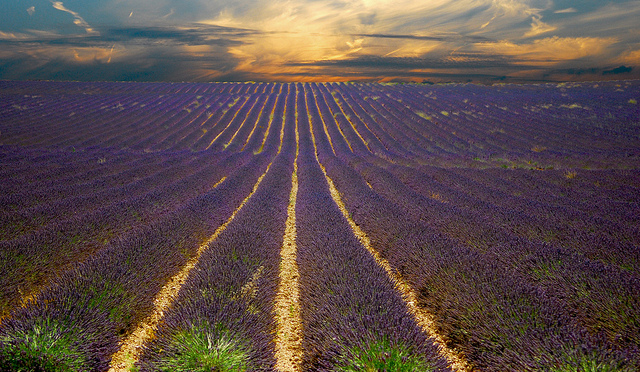
Although this region encompasses other places on this list, Provence deserves a mention of its own. It has a very diverse geography but Provence is best known for its irresistible countryside landscapes filled with endless lavender fields, lush olive groves and ancient hilltop villages. Long lazy days and alfresco lunches await you in this rural chic paradise. Make sure you include a trip to the impossibly picturesque villages of Baux-de-Provence and St. Rémy and also the spectacular walled city of Avignon.

8. Versailles


A wealthy suburb of Paris, Versailles is an important administrative centre and a proud tourist attraction in its own right. It’s most famous for its chateau – the grand and ornate Palace of Versailles which once housed the kings of France, (including the ill-fated Louis XVI and his wife Marie Antoinette). Both the beautifully preserved palace and manicured gardens are extraordinary and they also offer an interesting insight into the lives of 18th century French royalty before the start of the legendary Revolution.

9. Giverny


Giverny is a riverside rural idyll located on the borders of Normandy which is most famous for being the birthplace of impressionism. The small village was once Claude Monet’s cherished country retreat and now both his pink shutterboard house and highly photogenic country gardens are open to the public. Planted by Monet himself, the walled water garden (which inspired so many of his famous paintings) features white and purple wisterias, water lilies, weeping willows, bamboo and the iconic green Japanese bridge.

10. Strasbourg


Located right on the border of Germany and France this heritage city has distinct characteristics of both countries. It’s a picturesque, almost twee town radiating an old world charm which really draws the visitors. Famous for its riverfront half-timbered houses, beautiful gothic cathedral and fondness for flowers, it also makes a great base for those wishing to visit the nearby Black Forest or the River Rhine.

Wednesday, April 17, 2013

The Tour de France in the land of the rising sun


???????????????:???? ?????? by ???????? ??

(The Tour de France in the land of the rising sun : Creation of the Saitama Criterium by Le Tour de France)

On 26th October 2013, Amaury Sport Organisation and the City of Saitama in Japan will launch the first Saitama Criterium by Le Tour de France.

As the Tour de France prepares to celebrate its one hundredth edition, its popularity and influence beyond the French borders have never been as high.

Japan is not foreign to this phenomenon and its main TV channels have been broadcasting images of the Tour de France for the last thirty years.

Two of its representatives, Fumiyuki Beppu and Yukiya Arashiro, even featured in the final classification for the first time on the Tour de France in 2009.

Saitama and A.S.O. have therefore decided to boost the ever-growing popularity of the Tour de France in Japan, by creating the Saitama Criterium by Le Tour de France, an event which will see some of the world's leading riders, having won stages and worn the classification leaders' jerseys on recent editions of the Tour de France, battle it out.

It will be the very first criterium of this type that will convey the spirit and magic of Le Tour though its values and its heroes.

"Enhancing the standing of the Tour de France throughout the world is a major objective for A.S.O. and we are proud to observe the enthusiasm already generated by the creation of the Saitama Criterium by Le Tour de France, so far from the homeland of the world's biggest cycling event," said Mr Jean-Etienne Amaury, President of Amaury Sport Organisation.

"The creation of this new event follows on from a range of successive events in the past, including the World Championships in 1990, the creation of the "Nuit du Tour" by JSports and the appearance of Beppu and Arashiro in the race peloton, two riders who perfectly reflect Japan's growing attachment to cycling," added Mr Christian Prudhomme, Director of the Tour de France.

A new setting, a new country but the same values, such is the spirit in which the race will take place in the heart of Saitama. It will be both a major popular event as well as a promotional tool that only the Tour de France knows how to produce, thanks to the TV footage which is beamed around the world.

"Cycling brings various good values to society. My wish is that the event will bring smiles to everyone in Saitama and Japan," said Mr Hayato Shimizu, Mayor of Saitama.

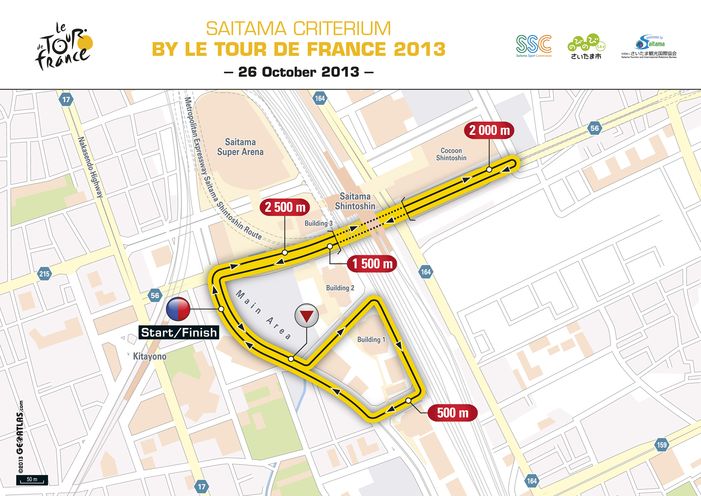
A.S.O. will manage the event that will take place on a 2.7-km circuit winding through the city centre, on which a pack of 60 riders (30 Japanese and 30 international competitors) will battle it out, promising an intense and spectacular race.

Throughout the day, a village combining fun and educational activities based on the theme of cycling will be open to the spectators.

Significant resources will be devoted to promoting cycling in the city, as a sustainable means of urban transport.

On 26th October, the Tour de France will settle down in Saitama, Japan.

All information on  www.letour.fr


Mr Jean-Etienne Amaury (President of Amaury Sport Organisation) presenting the Saitama Criterium by Le Tour de France concept together with Mr Hayato Shimizu (Mayor of Saitama)

Mr Hayato Shimizu (Mayor of Saitama) presenting the Tour de France yellow jersey bearing the Saitama City logo and Mr Jean-Etienne Amaury (President of Amaury Sport Organisation) with the mascot of Saitama

Draft of the 2.7 km race circuit of the Saitama Criterium by Le Tour de France


Tuesday, January 1, 2013

Best Journey In France | Canyon du Verdon

Best Journey In France | Canyon du Verdon. Especially if you're an exponent of journey tourism, i feel this place may well be your 1st selection for the tour this year. If you would like a vacation then we have a tendency to advocate to go to France, additionally to the Eiffel Tower then i like to recommend the Canyon du Verdon as your vacation destination, this place has excellent views and nice potential for the taken footage. Canyon du Verdon may be a spectacular gorge that forms the border between the Alpes - de - Haute - Provence and therefore the Var. Up to 700 m deep, canyon 21 - km-length varies between 51 and 100 m at rock bottom and 200-1500 m at its edge.


Although abundant smaller than the Grand Canyon of Arizona, within the Gorges du Verdon, compact, wild and exquisite. Crystal clear river flowing below the Canyon du Verdon, a formidable sight indeed. This is often a motivating tourist sites, stunning scenery is a superb location for searching photos. From Castellane to the village Rougons, Verdon river flows clear and quick, and follow the road along the bank. In Rougons, by the purpose elegant, river plunge into a slender rock walls, and no solution till it comes out the western finish before flowing into Lac de Ste Croix. From the east, the D952 goes from Castellane all the manner along the North Rim canyon, otherwise you will flip left at the Pont de soleils and follow the road past Trigance to urge to the South Rim. Accessing the canyon from the west, Moustiers - Ste - Marie or Lac de Ste Croix, provides you the choice of driving along the North Rim (D952) or the South Rim (D71, through Aiguines).

Monday, December 24, 2012

Best Travel And Vacation In France | Basilica of the Sacré Cœur


Best Travel And Vacation In France | Basilica of the Sacré Cœur. Vacation time is almost here, do you have planned for this year's holiday in ahir. Paris is one city you can visit interesting, not just the Tower of Pizza or the beauty of the city alone. There are other tourist attractions are very appealing to you visit the Basilica of Sacre Coeur (Sacred Heart). The Basilica of the Sacré Cœur (Sacred Heart) is a Parisian Roman Catholic church and landmark, crowning the butte Montmartre (‘Montmartre hill’), the highest point in Paris.

The nineteenth century church was designed by the architect Paul Abadie (who died in 1884, when only the foundations had been laid) in the Romano-Byzantine architectural style. Its foundation stone was laid in 1875, and was built with the direct involvement of the Third French Republic to mark the foundation of the new French state whose constitutional laws were enacted that year. It also was intended as a public monument to mark the memory of the many French citizens who lost their lives in the Franco-Prussian War and its aftermath, the Commune of 1871.


However it was not completed until 1914 and not officially opened for worship until 1919 after the end of the First World War, which ironically was seen by many French people as revenge for Germany’s¹ defeat of France in the Franco-Prussian War. The site is traditionally associated with the beheading of the city’s patron, Saint Denis, in the 3rd century. Legend says that upon being slain, the bishop Denis picked up his severed head and carried it several miles to the north where the city of Saint Denis stands today.

More recently, during the Commune of 1871, hundreds of Communards hid in the chalk mines of the butte Montmartre, and were forever imprisoned inside when the government troops dynamited the exits. The basilica was paid for by national subscription. Its iconography is distinctly nationalistic: the triple-arched portico is surmounted by two bronze equestrian statues of France’s national saints, Joan of Arc and King Saint Louis IX (by H. Lefebvre). Even the great bell, the Savoyarde, has a nationalist program, Savoy having been attached to France as recently as 1860. Cast in Annecy in 1895, it is one of the world’s heaviest bells, at 19 tons.


Sacré Cœur is built of Château-Landon (Seine-et-Marne) stone, a frost-resistant travertine that constantly weathers out its calcite, so that it bleaches with age to a chalky whiteness. Since 1885, when it was partially built, the Blessed Sacrament has been continually on display in a monstrance above the high altar.

Sunday, November 4, 2012

Arc de Triomphe Paris; one among the foremost widespread landmarks in France

Arc de Triomphe Paris. The Arc de Triomphe in Paris is one among the foremost widespread landmarks in France. The monument was designed to honor everyone who fought and perished throughout the Napoleonic and Revolutionary Wars. The monument is at intervals the center of the Place Charles de Gaulle. This will be at the Champs-Elysees’ west end. The Arc is that the highlight of the historic landmarks from the Louvre’s courtyard all the due to Grande Arche de la Defense. You will be ready to reach the place by manner of the pedestrian tunnel at the Champs Elysees’ north side.


On the surface of the monument are the names of the generals who fought at intervals the Napoleonic and Revolutionary Wars. All the French victories are inscribed there. Below it is the Tomb of the Unknown Soldier. The monument is over 160 ft (50 m) tall. It's 72 ft (22 m) deep and 148 ft (45 m) wide. The vault is 40.62 m (48.0 ft) wide and 29.19 m (95.8 ft) high. The vault is 8.44 m (27.7 ft) wide and 18.68 m (61.3 ft) high. The Arc de Triomphe in Paris is that the second biggest triumphal arc at intervals the planet. Aside from the soldiers’ names, the Arc is additionally laden with martial sculptures and battle scenes. This includes the Rude’s La Marseillaise.

Jean Chalgrin designed the monument in 1806. A vicinity of the concept drew inspiration from the Roman Arch of Titus. Chalgrin was commissioned to vogue it by Napoleon. It had been meant to commemorate his conquests. Putting in place place the muse took over a pair of years. When Chalgrin died in 1811, Jean-Nicolas Huyot took over. The structure would not be completed until 1836. Throughout the Sixties, the Arc began to blacken as a result of pollution from automotive exhausts. This was remedied by bleaching from 1965-66. This Arc mustn't be confused with the Arc de Triomphe du Carrousel. That landmark is found near the Louvre.

The gap times are from Apr. – Sept., 10:00 a.m. – 11:00 p.m. daily. From Oct. – Mar. It's 10:00 a.m. to 10:30 p.m. Final entry is 0.5 an hour before closing. Since the Arc de Triomphe in Paris has been designed, armies have used it for his or her victory marches. These embody the Germans in 1871 and 1940. The French conjointly used it in 1919.

The standard admission fee is 9 Euros. Those ages 18-25 are charged 5.50 Euros. Those below 18 are free to enter provided they are accompanied by a member of the family. European citizens have free admission.


Older Post ►
 

Copyright 2011 travel-world is proudly powered by blogger.com | Design by BLog Bamz Published by Template Blogger